Executive case study
Building a 70-Volunteer Leadership Structure
A large volunteer organization needed clearer roles, stronger accountability, better communication, and a sustainable succession structure.
Strategic objective
Increase capacity without concentrating responsibility.
The objective was to distribute leadership, clarify accountability, and create systems that would remain functional through recurring programs and leadership transitions.
Actions
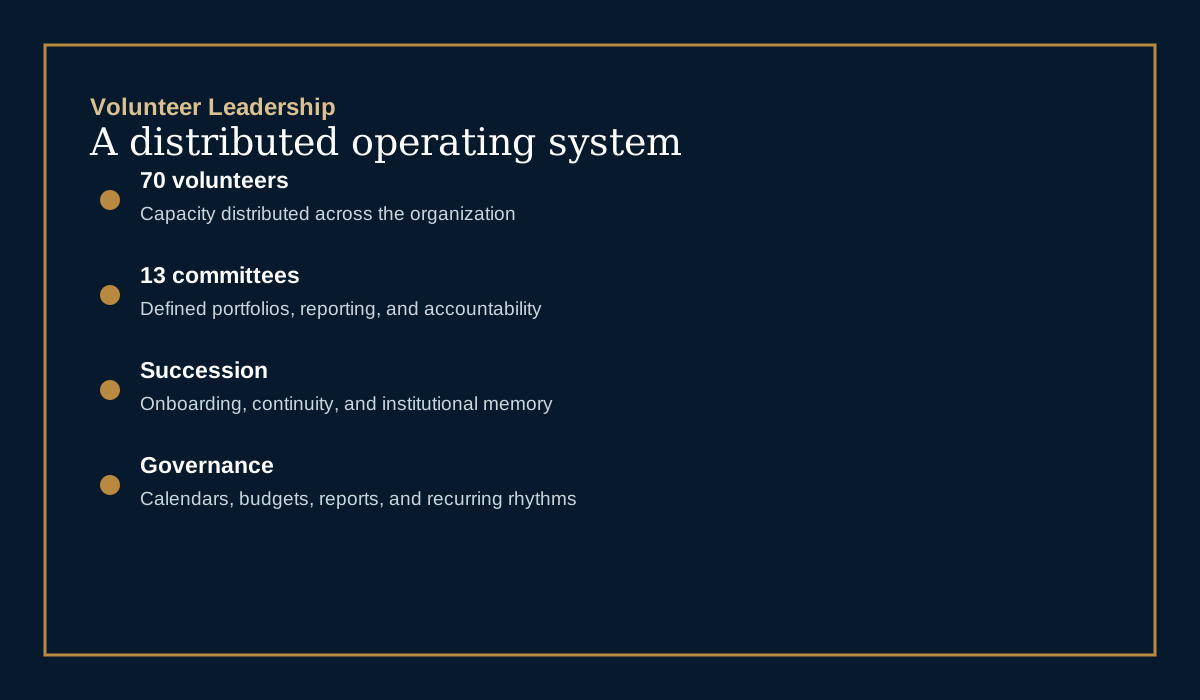
- Designed a 70-volunteer structure across 13 committees.
- Clarified committee responsibilities, reporting relationships, and leadership expectations.
- Established repeatable communication, onboarding, and coordination processes.
- Built systems for succession, continuity, and institutional memory.
- Connected committee work to broader organizational priorities.
Outcomes
Distributed capacity
More people could lead meaningful work without depending on a small core.
Stronger coordination
Defined portfolios and reporting improved cross-functional accountability.
Continuity
Onboarding and succession systems reduced dependence on individual leaders.
Evidence library
| Artifact | What it demonstrates |
|---|---|
| Committee rosters and master lists | Scale, distributed leadership, and role architecture |
| Responsibilities of Board Members | Role clarity and governance expectations |
| Bylaws changes and rationale | Governance improvement and change leadership |
| Annual calendar, budgets, agendas, and reports | Operating rhythms, fiscal stewardship, and executive communication |
Capabilities demonstrated
Organizational design · Volunteer governance · Capacity-building · Succession planning · Change leadership · Operating systems